Lessons from a 4500km road trip on a BYD Atto 3
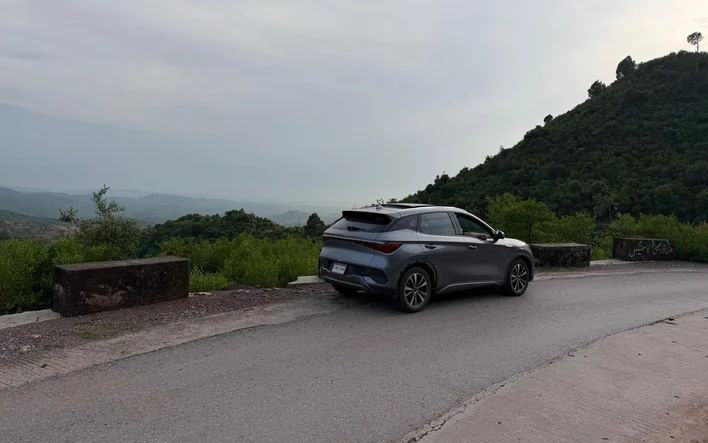
I planned the drive up from Karachi to Islamabad and beyond, having never done it before, not even in an ICE car. It was not anything pioneering. People have been doing this for months now. But I am an inexperienced driver, and my car had never been more than 20 km from a charger before. A full trip report will follow in the next few days. For now, here is what I learnt from a 4,500 kilometre EV road trip across Pakistan.
Trust and use the apps (to an extent)
Trip planning was a breeze. It does not matter which app you prefer, ChargePK or others. Whichever one you use sets out a route plan and tells you where to stop and how much to charge. I used ChargePK together with Google Maps. The app told me exactly where to go. I put that on my dashboard map and was on my way.
Also make it a practice to check in on the app when you charge, so the drivers behind you know the status of the chargers. The live map is only as live as the drivers who feed it.

Charge a little more than the apps tell you to
Hot weather punishes range. An empty motorway beckons and you are tempted to really test the limits. Uphill climbs, passengers and their luggage. These are all things we pay no heed to in the city, because we are never more than 20 km from a charger. On the highways and motorways, every one of them can have a real impact on your journey.
If the app tells you 60% charge is enough to get you to the next station, get 75%. That extra 15% helps with range anxiety and gives you a sufficient cushion should your plans change. It also helps if you need or want to take a detour. The range converter is a good reality check on what your car’s quoted range is actually worth out there.

Budget a bit of extra time
It is good practice even in an ICE car, and doubly so in an EV. You might get to a charger and find cars already ahead of you. A PHEV might be plugged in and slowing down your charge. Maybe the whole grid has gone down. Whatever the case, account for delays and build them into your trip. The charging time calculator tells you what each stop should cost you in hours. Add a margin on top of that.

Carry a spare tyre
My Atto 3, like most modern cars these days, did not come with a spare. It has a tyre inflator and a bottle of puncture sealant. Neither will be enough in case of a major puncture.
On my way from Lahore to Islamabad I saw a Sealion 7 stranded by the side of the road. They had suffered a blowout and were forced to wait for roadside assistance. Thankfully it was daylight, and it was the Lahore to Islamabad motorway instead of some godforsaken stretch of the Indus Highway or the National Highway. But disaster can strike anywhere, and it is better to be prepared. I have resolved to find a good backup tyre for my car, and you should too.

Chai at every charging stop, mandatory but not always good
A comprehensive review of the real fuel that runs the nation is a blog post for another time. Suffice to say I was not happy with the quality of chai at many of the rest stops. I have learnt to carry along a thermos and load up on good chai wherever I can find it. Just remember, the worst chai on the road from Karachi to Islamabad is at Moro. Avoid that one at all costs.
One last point: tip the attendants
Tip the attendants at all the EV stations. It does not have to be huge, but do tip them. We need these guys to be attentive to EV customers and happy to have us.

This was only the warm up. The full trip report is coming in two parts, and things are about to get a lot more exciting. Stay tuned.
Plan your own run
Every charger on the route, live status, prices and phone numbers, plus a journey planner that builds the charge plan for you. Free on iPhone and Android.
Get the ChargePK appFrequently asked questions
Can you road trip a BYD Atto 3 across Pakistan?
Yes. This driver covered more than 4,500 km from Karachi to Islamabad and beyond with no prior long distance experience, planning stops with charging apps and Google Maps. The motorway charging network now makes the route routine, though planning still matters.
How much extra charge should you add on a Pakistani motorway trip?
Add roughly 15% over what the app suggests. If it says 60% is enough to reach the next station, charge to 75%. Heat, uphill climbs, passengers and luggage all cut range on the highway, and the cushion also covers detours and changed plans.
Do EVs in Pakistan come with a spare tyre?
Most modern EVs, the BYD Atto 3 included, ship with only a tyre inflator and puncture sealant. Neither helps in a major blowout, so buy a proper backup tyre before a long trip, especially for highways away from quick roadside assistance.
Should you tip the attendants at EV charging stations?
Yes. It does not have to be much, but a small tip keeps station attendants attentive to EV customers and glad to see them, which benefits every driver who charges there after you.
How do you plan an EV route in Pakistan?
Use a charging app such as ChargePK to build the route plan. It tells you where to stop and how much to charge, and you can follow the drive itself on Google Maps. Check in at each charger in the app so the drivers behind you know its live status.
Where can you charge an EV between Karachi and Islamabad?
The motorway network now covers the whole run, with DC fast chargers at stops like Hyderabad, Moro, Zahir Pir and the M5, M4 and M2 service areas, and charging continues into the hills at Murree and Balakot. The ChargePK map lists every station with live status, price and a phone number.
What can slow down charging at a Pakistani motorway station?
Cars queuing ahead of you, a PHEV sharing the cabinet and pulling down your speed, or a grid outage taking the whole station offline. None of them ruin a trip if you have budgeted extra time and hold a healthy battery cushion.