The Last Charge Before Kaghan: Inside the Balakot EV Hub
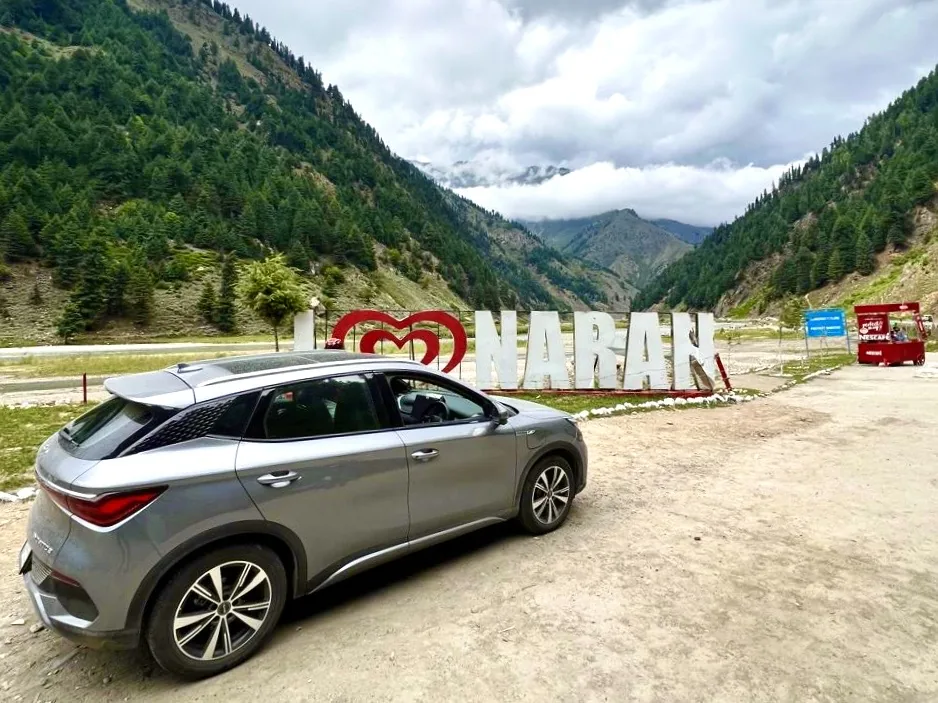
Balakot is where the grid ends and the mountains begin. Drive north from Mansehra and the road narrows, the Kunhar river appears on your right, and past the town the electricity gets patchy along with the thinning air. If you're taking an electric car up to Shogran, Naran or Saif ul Malook, Balakot is the last place you can really count on.
Why Balakot matters more than it looks
On a map it's a small town 28 km north of Mansehra. On a charging map it's the end of the line. ChargePK lists two public chargers in Balakot and one more up the valley, at Cedarwood in Shogran, 15 km on. After that there's nothing. No public charging at Naran, none at Kaghan, none at Saif ul Malook. Naran is about 81 km from Balakot by road, all of it uphill.
That's really the whole story. Once you leave Balakot, you're doing the round trip on whatever charge you've got, on mountain roads that drain a battery much faster than a motorway does. The nearest DC fast charger is about 52 km away in Nathiagali, in the completely wrong direction.
The man who drove up first
The Hub exists because Faheem Ahmed did the drive before anyone told him it couldn't be done.
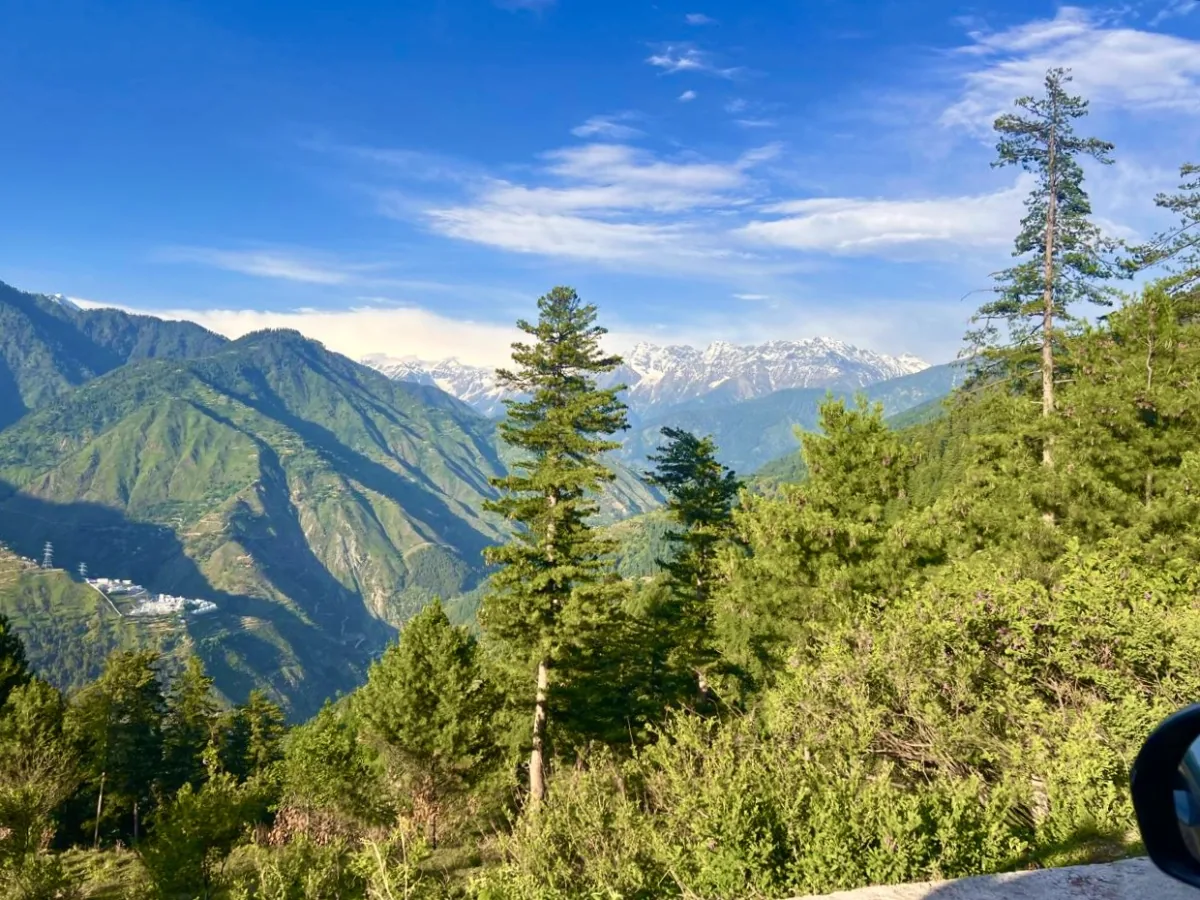
Last year on 14 August, Independence Day, he drove his electric car from Balakot all the way up to Naran. Most EV owners in Pakistan wouldn't have tried it. An admin from the PakEV community put up a post on Facebook about it: the first fully electric car to make it to Naran. That got people talking, and everyone wanted to know the same thing. How did he get that far?
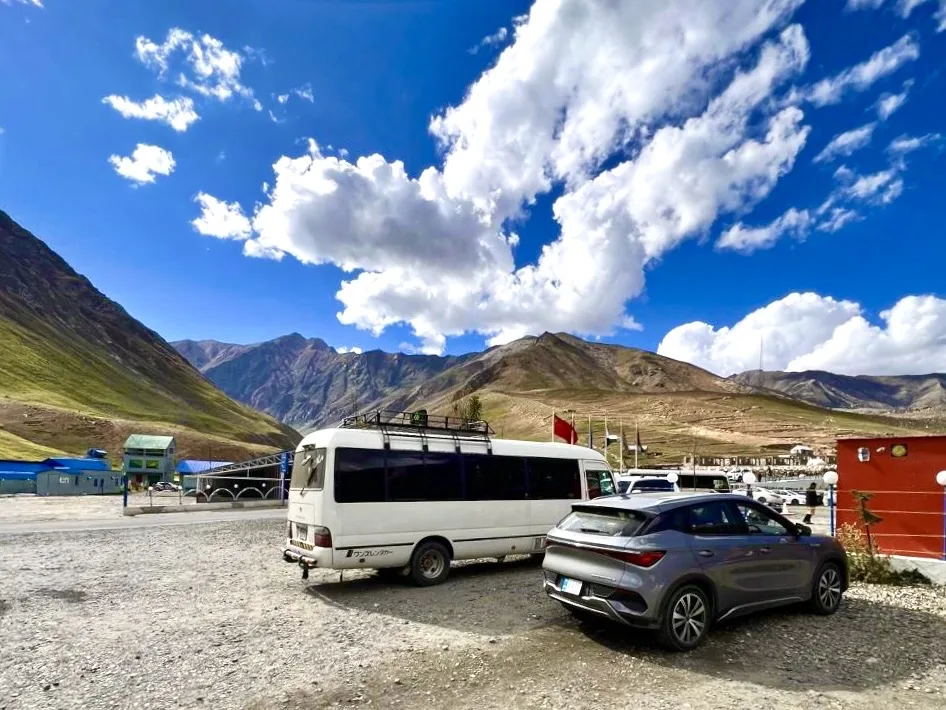
He answered it in September by going even further, from Balakot up to Babusar Top, 4,173 metres, on nothing but charge. First EV to make it to the top. After that, people weren't just asking how he'd done it. They wanted to do it themselves.
The problem was charging. Faheem had a setup at his house, and for a while he plugged people in himself, one or two cars at a time, doing strangers a favour after they'd driven a long way on hope. It was never going to scale. A few people suggested he turn it into a proper commercial charger, and he'd been thinking the same thing. He held off for a bit, then in May this year he decided to just try it. One 7 kW AC charger, a trial run to see what kind of response he'd get.
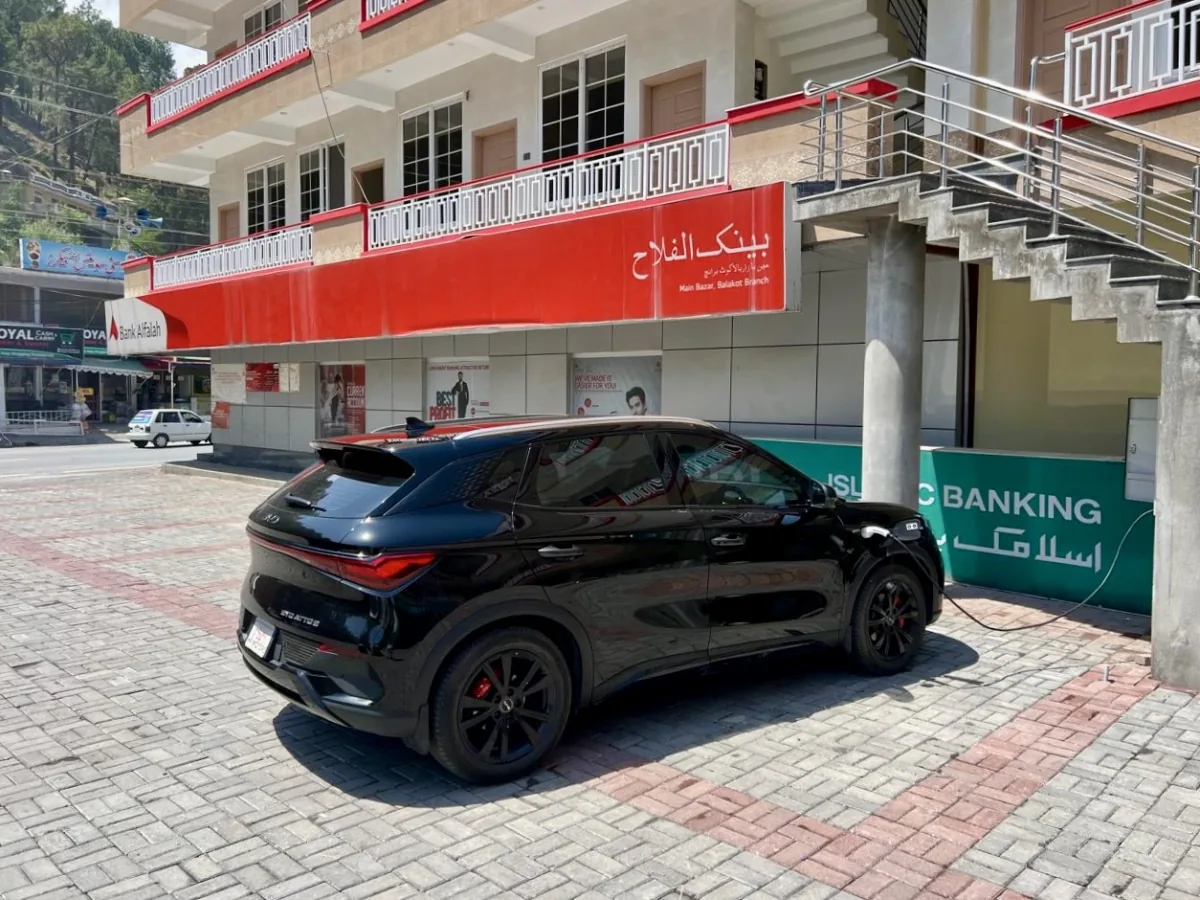
The response was there. On 10 June he switched on three chargers, two in Balakot and one up in Shogran, and that's when the Balakot EV Hub became a place you could actually plan a trip around. DC chargers are next.
What really got it moving was a BYD Atto 3 and a phone camera. One of the early visitors filmed his charging stop and put it on TikTok, and that brought in a lot of drivers who were planning a trip up north and now knew there was somewhere to stop. Getting it on Google did the rest.
Ask Faheem who actually shows up and it's families, almost all of them. Ninety to ninety five percent are families on holiday with the kids in the back, the rest are groups of friends. Weekdays, weekends, it's busy either way. Some call ahead, plenty just turn up. The solar wasn't some green statement. The house next door already ran on it, and load shedding is load shedding. A charger that keeps working through the outage is one people can trust.
And if you want the one story that sums up why a 7 kW charger in a small town matters, Faheem has it. A rental car driver was on his way back from Shogran after dropping off his guests. He rolled into Balakot at ten at night with 15% left on the battery. Someone told him there was a charger at the Balakot EV Hub. He plugged in for two or three hours and carried on.
The Balakot EV Hub
The Hub sits near the Shell pump on the main road. Three things about it matter more than its size.
It runs on solar. In an area where load shedding is part of daily life, a charger is only as good as the power behind it. The Hub is solar backed, so it keeps working on the afternoons when the rest of the town doesn't.
It takes RAAST. You can pay straight from your phone by bank transfer, which helps when you're three hours from a city and didn't think to carry cash.
Someone's actually there. Faheem helps drivers get set up, and calling ahead saves you a wait. For a lot of people this is the first time they've charged anywhere outside a city.
| Charger | Power | Connector | Price | Notes |
|---|---|---|---|---|
| Balakot EV Hub | 7 kW AC | Type 2 + socket | ~Rs 120/unit | Solar backed · 6 AM to 6 PM · RAAST |
| Pine View Hotel & Restaurant | 7 kW AC | Type 2 + socket | ~Rs 120/unit | Hotel and restaurant on site |
| Cedarwood, Shogran | 7 kW AC | Type 2 + socket | ~Rs 150/unit | Last charger up the valley |
Planning a Kaghan trip in an EV
None of this puts the valley out of reach. It just makes it a trip you plan instead of one you wing.
- Get to Balakot with charge to spare, not on fumes. A 7 kW charger adds roughly 35 to 40 km of range an hour. Turn up at 8% and you're in for a long wait.
- Charge to full before you head up. Whatever you've got at Balakot is what you've got for the whole round trip, minus what the climb takes.
- Assume the mountains cost you more than the numbers say. Steady climbing, cold air and the AC all take their share. Plan for well under the brochure range. The range converter shows you what a quoted range is actually worth.
- Call ahead. One 7 kW charger serves the whole town. In season, a phone call is the difference between plugging in and waiting around.
- Work out the timing. The charging time calculator tells you what a top up costs you in hours before you commit to the drive.
What one charger in a small town actually does
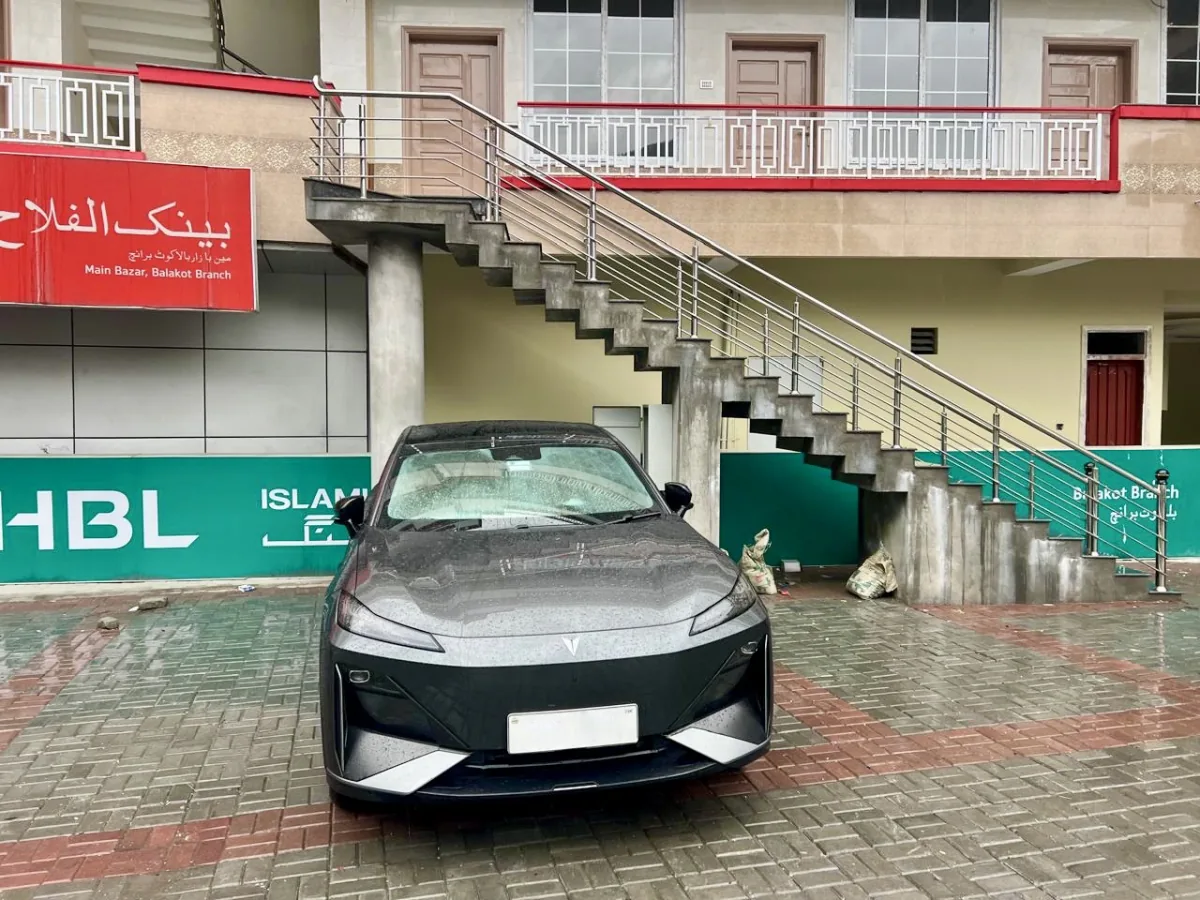
It's easy to look at 7 kW and think it's nothing much. That's the wrong way to measure it. Before the Hub, taking an EV up the Kaghan Valley meant leaving with enough charge for the entire round trip and hoping nothing went wrong. Now there's a place to stop.
Pakistan's charging network isn't going to be built by big operators dropping DC chargers on motorways. It gets built by people like Faheem, someone in a town the tourists pass through who decides it's worth running a cable and putting up a solar array. The motorways get the headlines. The valleys open up one hotel and one filling station at a time.
Find every charger in Pakistan
ChargePK is free. Live map, journey planner and charging calculator. Get it on your iPhone.
Download on the App StoreFrequently asked questions
Can you drive an electric car to Naran?
Yes, with planning. There is no public charging at Naran, Kaghan or Saif ul Malook, so the round trip from Balakot has to be covered by what you carry. Charge to full in Balakot before heading up.
Where is the last charger before the Kaghan Valley?
Cedarwood in Shogran, about 15 km beyond Balakot, is the last public charger up the valley. Balakot itself has two, including the solar backed EV Hub near the Shell pump.
How long does charging in Balakot take?
Both Balakot chargers are 7 kW AC, which adds roughly 35 to 40 km of range per hour depending on the car. A meaningful top up is a meal and a walk, not a coffee.
Does the charger work during load shedding?
The Balakot EV Hub is solar backed, so it keeps running when the grid does not, which is the main reason it is worth calling ahead rather than assuming.
How much does it cost?
Around Rs 120 per unit at both Balakot chargers as listed. A 30 kWh top up is therefore roughly Rs 3,600. Live pricing is always on the ChargePK map.