Best Electric Cars in Pakistan (2026) and Where to Charge Them
Pakistan's EV choice has widened fast, and picking the right car now means thinking about more than range and price, it means knowing how and where you'll charge it. Here's a 2026 rundown of the electric cars you can buy, what to look for, and how each fits the country's charging network.
Electric cars you can buy in Pakistan in 2026
The line-up changes quickly as new models arrive, but these are the brands most commonly seen on Pakistani roads today. Prices and exact specifications vary by variant and change often, so always confirm the latest with the dealer.
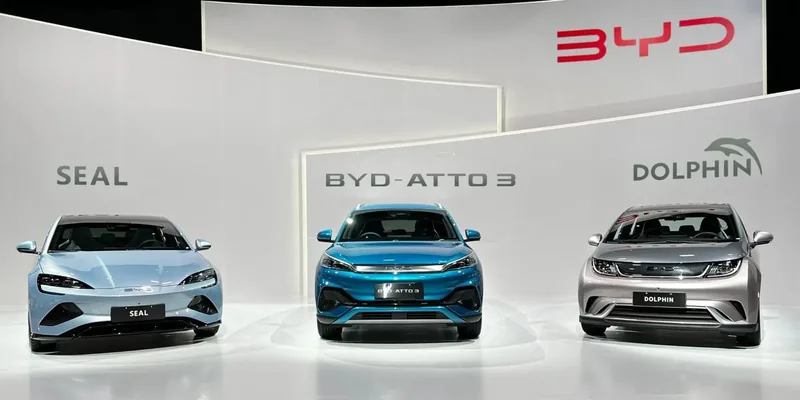
- BYD (Atto 2, Atto 3, Seal, Sealion 7), the most established EV brand in Pakistan. The Atto 2, at PKR 72.9 Lakh with 380 km of range, has become the country’s best selling electric car, and the range now runs from it up to the premium Sealion 7.
- Deepal (S07, E07, L07), modern, longer range options, including range extended versions for buyers not ready to rely fully on chargers.
- MG (ZS EV, Binguo), practical EVs that have been on sale here the longest.
- GAC (Aion UT, Aion V, Hyptec HT), the newest official entrant, from a PKR 63.99 Lakh hatchback to Pakistan’s only car with gullwing doors.
- Hybrids with a plug and without, for buyers who want a backup engine: the Haval H6 PHEV and H6 GT PHEV, the BYD Shark 6 pickup, and conventional hybrids like the Toyota Corolla Cross Hybrid.
Because availability shifts month to month, treat any "best" list as a snapshot. What matters more for daily living with an EV is how it charges, and that's largely standardised in Pakistan.
What to look for when choosing an EV
- Real-world range, motorway speeds and air-conditioning can cut the rated figure by 20 to 30%, so judge a car on its realistic range, not the brochure number.
- Connector standard, almost all new EVs here use Type 2 for AC and CCS2 for DC fast charging, which means they work with the widest set of public chargers. (See our connector guide.)
- DC fast-charging speed, a higher kW acceptance means shorter motorway stops.
- Home charging, check what home wall-box the car supports; home charging is by far the cheapest way to run an EV.
Where to charge them
The good news: since nearly every EV sold in Pakistan uses Type 2 and CCS2, the same public charging network serves them all. ChargePK maps every AC and DC station across the country, and you can filter by connector to see only the chargers that fit your car. Coverage is strongest in Lahore, Karachi and Islamabad, with DC fast chargers along the major motorways for intercity travel.
What they cost to charge
Whichever model you pick, running costs are low: charging at home costs roughly PKR 20 to 40 per kWh, versus PKR 40 to 160 at public stations. For a full breakdown, see how much it costs to charge an EV in Pakistan.
The bottom line
For most buyers in 2026, the practical choice comes down to real-world range, budget and after-sales support, and on charging, you're well covered as long as the car uses CCS2, which almost all do. Pick the car that fits your life, then let ChargePK handle finding the chargers.
Find every charger in Pakistan
ChargePK is free. Live map, journey planner and charging calculator. Get it on your iPhone.
Download on the App StoreFrequently asked questions
Which electric cars are available in Pakistan in 2026?
Commonly available EVs include BYD (Atto 2, Atto 3, Seal, Sealion 7), Deepal (S07, E07, L07), MG (ZS EV, Binguo) and GAC (Aion UT, Aion V, Hyptec HT), with more arriving every quarter. The BYD Atto 2 is currently Pakistan’s best selling EV. Confirm current models and prices with dealers as the line-up changes fast.
Do all electric cars in Pakistan use the same charger?
Almost all new EVs use Type 2 for AC and CCS2 for DC fast charging, so they share the same public charging network. Older imports like the Nissan Leaf may use CHAdeMO for DC.
Which EV is cheapest to run in Pakistan?
Running cost depends mostly on how you charge, not the model. Charging at home overnight is cheapest for any EV, at roughly PKR 20 to 40 per kWh.