Pakistan Plans 3,000 EV Charging Stations by 2030. Here Is the Real Math.
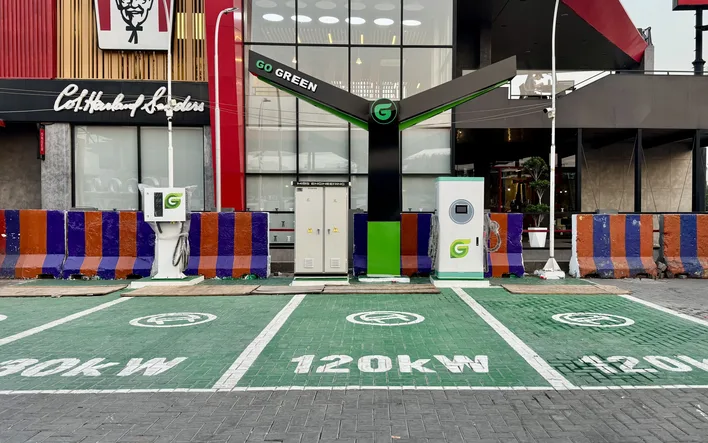
The Ministry of Industries and Production told the National Assembly this week that Pakistan plans about 3,000 public EV charging stations by 2030, with fast chargers at roughly 50 km intervals on the motorways and the N-5. We map this network for a living: there are 113 active DC fast charging stations in Pakistan as of today. Against a 3,000 facility target, that is an expansion of a different order of magnitude in four years. Here is what was actually announced, what it changes, and the honest math on whether it can happen.
What the government told the National Assembly
In a written reply to MNA Malik Shakir Bashir Awan, the ministry laid out the charging side of the New Energy Vehicle Policy 2025-30: around 3,000 public charging facilities nationwide by 2030, an initial phase of 40 fast charging stations along the motorways and selected sections of the N-5 at about 50 km intervals, fuel stations encouraged to install chargers, growth across fast, Level 2 and Level 1 charging, and battery swapping stations for electric two and three wheelers. To pull private money in, it offers a dedicated commercial electricity tariff for charging stations, expedited grid connections, and public private partnerships with viability gap funding.
113 DC fast chargers today, 3,000 facilities tomorrow
Our live map tracks 113 active DC fast charging stations right now, the kind of rapid sites the government's motorway plan is made of. Most sit in and between Lahore, Karachi and Islamabad. Hitting 3,000 by 2030 means commissioning roughly 700 stations a year, every year, starting now. For scale, the entire existing network took about four years to build. The plan's best shortcut is the one the ministry itself names: fuel stations. Petrol pumps already have land, grid connections and staff on every corridor in the country, and several fuel retailers already host chargers on our map today.
The 50 km promise, measured
Fast chargers every 50 km is the line that matters for anyone who drives intercity. Forty stations at that spacing cover about 2,000 km of corridor, roughly the N-5 alone, so phase one is about making the arteries drivable, not blanketing cities. The M-2 is already the best covered road in Pakistan, and our journey planner routes Lahore to Islamabad today without drama. The real gaps are the N-5 south of Multan, the M-5 and M-8 corridors, and Balochistan, where a single broken charger can strand a trip. Fifty kilometre spacing, if it arrives, retires the range anxiety math for every EV on sale here, including sub 300 km city cars.
The money: who gets subsidised, who does not
The direct cash goes to small vehicles: Rs 80,000 per electric two wheeler and Rs 400,000 per three wheeler, under the NEV Policy and the PAVE programme. Cars get structure instead of cash: the government rejected the IMF's push to raise EV sales tax to 18 percent, keeping battery EVs at 1 percent under the draft Auto Policy 2026-31, with a proposed 10 percent federal excise only on EVs above USD 75,000. If you are weighing a purchase, our EV vs petrol calculator and the full catalogue already price that trade for every car on sale.
What this means if you already drive electric
Nothing changes tomorrow; everything changes if phase one lands. Watch for the first 40 motorway sites and hold the plan to its own yardstick. Meanwhile the practical tools stay the same: the live charger map for what exists, charging near you, the charging time calculator for planning stops, and our guide to how public charging works in Pakistan. If you run a station or plan to build one on the back of this policy, host it on ChargePK so drivers can find it from day one.
Every charger in Pakistan, in your pocket and on your dashboard
The ChargePK app is free on iOS and Android, with Apple CarPlay and Android Auto built in. Find every public charger in the country live, check connectors, prices and reviews, and plan intercity trips around real charging stops with the journey planner.
Download on the App Store Get it on Google PlayFrequently asked questions
How many DC fast chargers does Pakistan have today?
ChargePK tracks 113 active DC fast charging stations across Pakistan right now, live on our charger map. That is the entire rapid charging base the government's 3,000 facility plan builds on. The network is concentrated in Lahore, Karachi, Islamabad and along the M-2, with coverage thinning fast off the main corridors.
What exactly did the government announce?
In a written reply to the National Assembly, the Ministry of Industries and Production said Pakistan plans about 3,000 public EV charging facilities nationwide by 2030 under the New Energy Vehicle Policy 2025-30, starting with 40 fast charging stations along motorways and selected sections of the N-5, placed at roughly 50 km intervals.
Where will the first 40 fast chargers be?
Along the motorways and selected sections of the National Highway N-5, at intervals of about 50 km. Exact sites have not been named. For perspective, 40 stations spaced 50 km apart cover about 2,000 km of corridor, roughly the length of the N-5 alone, so phase one is corridor coverage, not city coverage.
Is there a subsidy for buying an electric car?
Not for cars. The announced subsidies are Rs 80,000 for electric two wheelers and Rs 400,000 for electric three wheelers under the NEV Policy and the PAVE programme. Four wheeler buyers get tax treatment instead: EVs keep the lowest sales tax of any powertrain under the draft Auto Policy 2026-31.
Is the EV sales tax going up to 18 percent?
No. The government rejected an IMF proposal to raise sales tax on EVs to 18 percent. The draft policy keeps battery EVs at 1 percent, moves range extenders to 6 and plug in hybrids to 9. A 10 percent federal excise duty has been proposed, but only on EVs valued above USD 75,000.
What is the NEV Policy 2025-30?
Pakistan's five year New Energy Vehicle policy. Beyond the charging network it covers subsidies for electric two and three wheelers, battery swapping stations, a dedicated electricity tariff for charging stations, local manufacturing of motors, battery packs, power electronics and chargers, and a collection and recycling system for end of life EV batteries.
Can I open an EV charging station in Pakistan?
The government is courting exactly that: a dedicated commercial electricity tariff, expedited connections, and public private partnerships with viability gap funding. Reportedly 3,800 investors expressed interest in 2025. If you operate or plan a station, list it on ChargePK to reach the drivers already searching, and host charging to get started.
Will petrol stations get EV chargers?
That is the stated plan: the government wants fuel stations to add charging units, alongside expanding fast, Level 2 and Level 1 charging. Several fuel retailers already host chargers on our map today, mostly along the motorways, and this is the fastest way to add sites because the land, power and staff already exist.
What about electric bikes and rickshaws?
They get the biggest push: Rs 80,000 and Rs 400,000 subsidies respectively, plus dedicated battery swapping stations. Swapping suits two and three wheelers because the batteries are small enough to exchange by hand, which is why most of Pakistan's electric mobility growth so far has come on two and three wheels.
Is 3,000 stations by 2030 realistic?
It is ambitious. Getting from 113 DC fast stations to a 3,000 facility network means commissioning roughly 700 sites a year for four years, against a current pace of a few dozen. The plan's strongest levers are the fuel station route and the dedicated tariff; the hard parts are grid connections outside big cities and making a charger pay for itself before utilisation catches up. Watch the first 40 motorway stations: if those appear on schedule, the rest becomes believable.
How do I find EV chargers in Pakistan right now?
The ChargePK map lists every charger we track, including all 113 DC fast stations, with connectors, prices, hours and reviews. The free app, on iOS and Android with Apple CarPlay and Android Auto built in, puts the same live map on your phone and your dashboard and plans intercity journeys around real charging stops. If a new station opens near you before we list it, submit it and we will verify and add it.